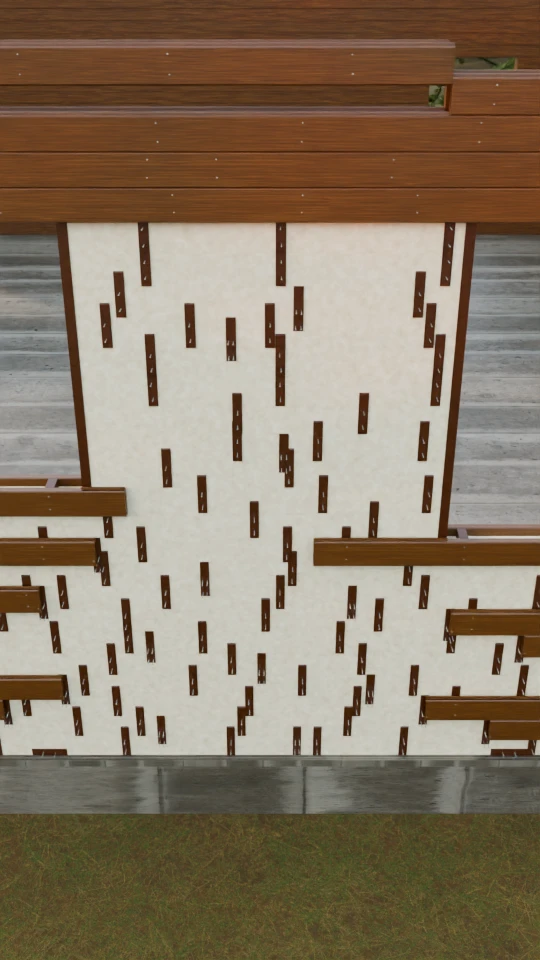
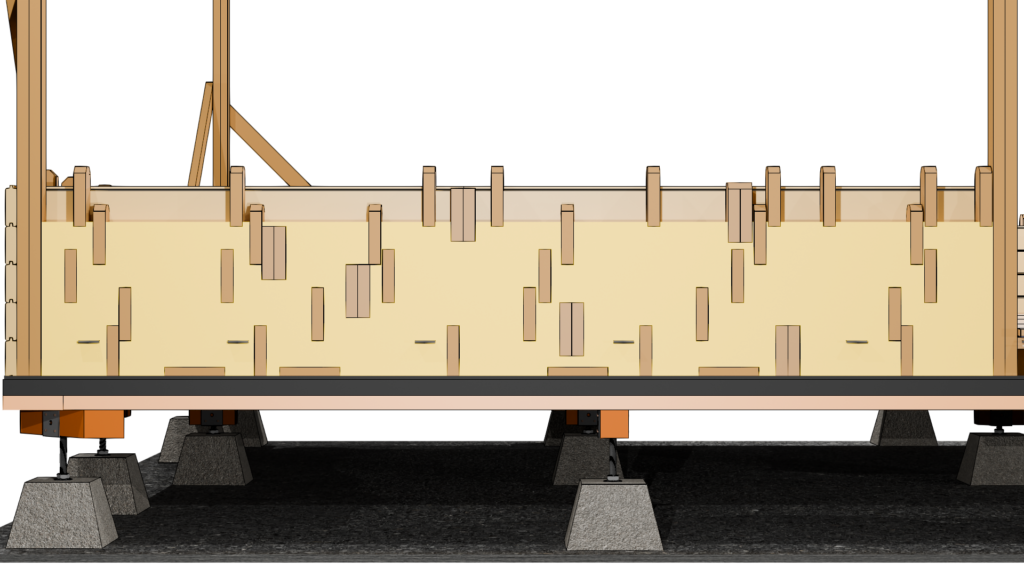
The core of Lincoln Block is the spray foam “lattice” that offers:
- Shear strength
- Compression strength
- Insulation
- Vapor barrier
All-In-One.
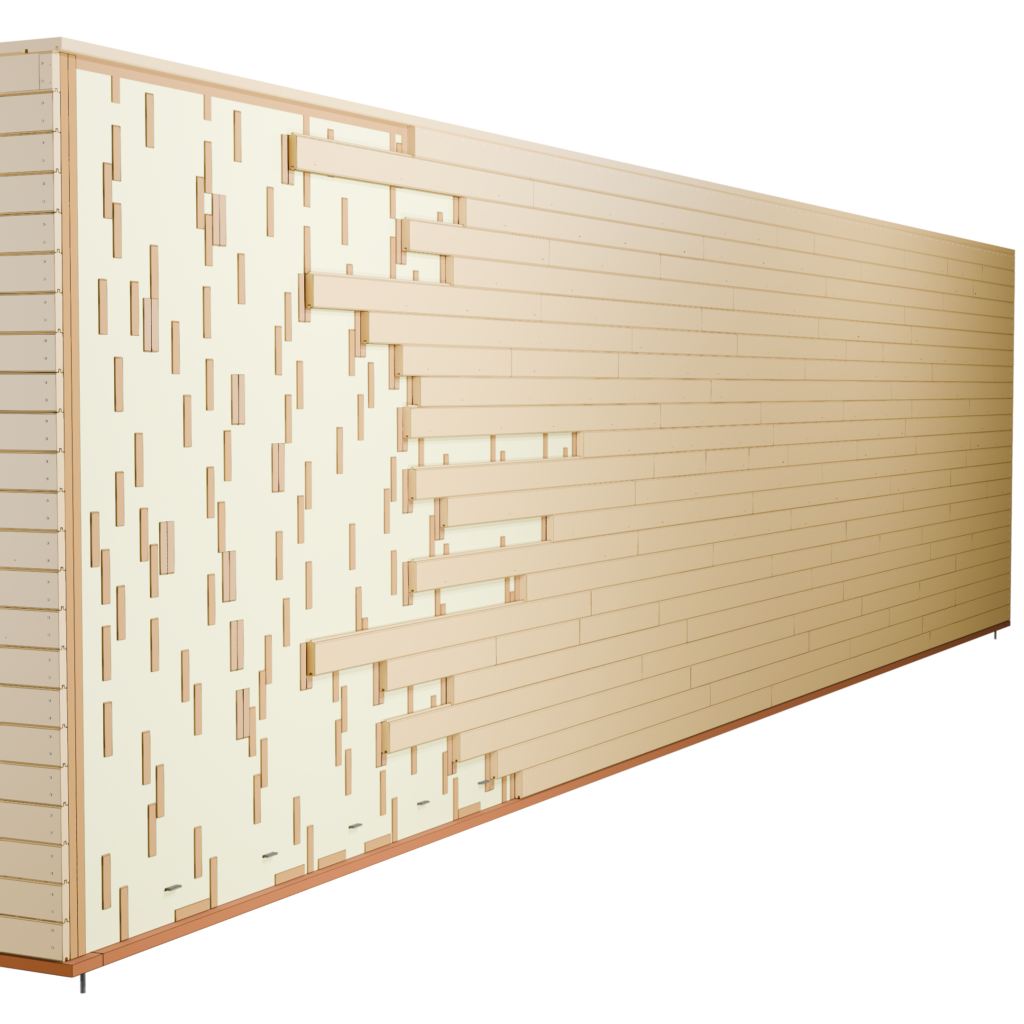
The foam bonds to and fills the entire interior bay of the wall after you stack blocks and install fixtures.
It’s the final step of the Cut, Glue, Stack, Nail, Foam sequence of installing Lincoln Block.
A normal house uses spray foam between the studs, and then the excess foam is trimmed from each bay before drywall is applied. That is a long and laborious process that makes the application of the spray foam a chore and increases labor costs substantially.
Lincoln Block solves this problem by foaming in stages, after stacking several courses. Minimal foam waste, super easy foam application, and utilizes all the available properties of the spray foam. Normal studded houses can’t leverage the shear and compression strength that modern spray foam technology offers, which makes Lincoln Block a very unique application of foam.
The wall you end up with is similar to a single insulated panel, except instead of rigid foam and heavy installation machinery, you simply glue and stack Lincoln Blocks, nail them together, and spray the insulation in. The wall is finished as you stack, so no extra insulation is required to meet building code requirements.

There’s nothing out there quite like it! Lincoln Block is an affordable, long lasting, and energy efficient way to build a house. It replaces your traditional framing with a stacking wood block system that has very low labor costs compared to anything else, thanks to it’s LEGO-like application. The spray foam lends to this ease of use by lowering the barrier to entry for spray foam insulation. Normally spraying a whole house for the exterior wall insulation requires wearing a full protective suit and breathing protection because it’s an indoor setting. Spraying as you go with Lincoln Block means you’re always outside in a well ventilated area, so the off gassing has no chance to linger inside an enclosed space where you’re working. It’s a drastic difference from how the spray foam industry is operating right now. The thing is, it’s the best kind of insulation available right now so many municipalities are opting in to require it’s use, which is understandable given the energy savings over long periods of time.
Honestly it takes too long and requires too much expertise to spray foam an entire house when you really think about it. The foam has to go in after all the other trades are done, and the foam technician has to be absolutely perfect on his application because mistakes mean the other trades have to go back and fix it after digging out the foam. Lincoln Block simplifies the spray foam application such that the risk of its use is greatly diminished. This is because of how the building is spray foamed in stages, around 7 courses of Lincoln Block at a time. This means the spray foam job won’t interfere with any of the jobs that have already been done, and it will be a lot easier to actually spray the insulation because it’s going directly into the hollow wall cavity.